INtegrative bodywork
I found deep tissue, myofascial release, yoga, craniosacral therapy, somatic experiencing, and acupuncture as talk therapy reached its limits. These modalities helped me relax and engage differently in my body, which resolved confusion (coupling). Multiple approaches affect change more often. In somatic work, coupling occurs when the nervous system links sensations, emotions, images, and thoughts from the past. When the physical parts of us relax or re-engage, anything that’s stuck can move, and dysfunctional patterns change. It becomes clear how to use your time and energy, so you take better care of yourself. Trauma dissolves with the right context in life and good therapeutic work.
Craniosacral THERAPY AND SOMATIC EXPERIENCING add color to your sensory palette. Sensations AND structures are felt as distinct, saturated, fluid, and complete.
The significance of birth and family dynamics
8-10 minute read
There were pieces of my trauma that previous therapists attributed to a chaotic upbringing, but I felt they were rooted in birth. After a few poor talk-therapy practitioners, I found a woman who specialized in neuromuscular therapy and somatic experiencing, confirming that many of the places where I got stuck were related to the way I moved or stopped moving through the birth canal. Different passages we experience over the decades, such as finding new work, questioning relationships, renegotiating boundaries with family or friends as we age, or dealing with loss and health issues, are typical threads in the web of humanity. Transitions are a bid for rebirth, and our bodies revert to patterning from that process. If enough threads overlap, we get stuck, overwhelmed or underwhelmed, and struggle to regain function and restoration.
Long-covid accompanied by multiple deaths and other unfortunate incidents, wrecked and partially disabled me for 6 years; I lost two dogs, quarantined with black mold complicating my lung issues, and watched both parents and a grandmother start to pass simultaneously- my parents developing terminal issues after having covid. It cost me my life savings from poker to navigate all of this. I was humiliated, then humbled, starting over in a new field of work. Identity and status as a very successful online poker pro evaporated. That was the first job I ever loved and made millions doing it. And then a year after getting covid, I couldn’t walk anymore, with insanely high blood pressure, pinched nerves, a slipped disc, and cognitive issues so bad that I forgot my name and address while at Fedex.
“Health and aging are both privileges.”
I had never been severely sick before. I was at the point where I’d try anything and stumbled into Sarah Farwell’s office. She was a craniosacral therapist who tractioned my skull, coupled with a lymphatic technique that released my spine, allowing fluid to rush out from my midline, filling my limbs. I cried as years of grief and dysfunction evaporated. The root of this inability to let go in the cervical spine is prenatal trauma, compounded by family dynamics. Craniosacral therapy was a religious experience, and once I melted into the table, I felt a cloud of energy about 6-8 inches thick surrounding my body, bathing me with a slight euphoric sensation on my skin. Think of a barely existent orb cloaking the body like a blanket of electricity that feels alive and restorative, while also restful.
My body processed its deepest griefs and fears with just the right amount of support (sensory input). Prenatal trauma can make it very hard to understand yourself. My issue was compression around the bottom of my skull that never resolved. Growing up in a batsh*t insane environment prevents that compression from coming undone and relaxing. You develop issues with the nerve chains running from the brain into the rest of the body, and the organs in your ears (vestibular system). This affects breathing, feeding, and emotional regulation (suck-swallow-breathe synchrony) as the nerves and muscles in the neck fail to engage properly. Digestion, balance, and being able to sense your body in space become challenging. Early intervention with bodywork on infants is one of the best ways to undo this dysfunction. Safety and satisfying a child’s needs can keep the repair in place.
Family values can prevent you from pursuing work that’s right for you (centering), and early unresolved trauma makes stress harder to manage as you’re confused too often. Eventually, your nervous system doesn’t get the right type of food, so it malfunctions. We then begin to see things like chronic illness and prolonged grief states. The other main piece of this is the energetic pull of the family you may not be fully aware of until parents pass away or you set precise boundaries. Your work may ground you, but boundaries give you space and the ability to strive or fulfill potential. If boundaries aren’t set well in families, a person can super-ground (ground the entire family unknowingly), which is how you get long-term issues where you feel low-energy activity-wise, but high-energy with thought, or the brain and CNS. You can only be regular enough, and not great enough. And you stay “sick” on behalf of the family, so they do not have to deal with uncomfortable feelings or sensations in the pit of their stomachs like grief, disgust, or shame. Psychology coined this role the identified patient and recommends stronger boundaries, but some of us might have to leave the family altogether to develop space. The identified patient is the only person in the family aware of true dynamics and absorbs conflict from others. Birth trauma makes you more sensory aware- you pick up on things very precisely. As my sister became a teenager, she and my mother struggled immensely (a common dynamic as a mother starts competing with her child). It was handled miserably, and I took on the rage, lashing out against inappropriate boundaries from parents. This is one healthy function of rage- protection and survival.
The Original Identified Patient
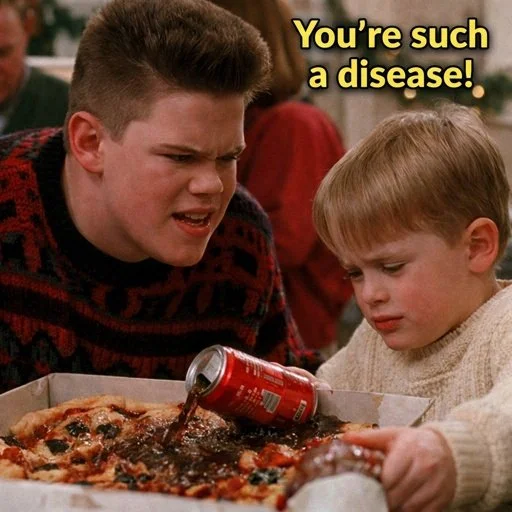
I am the identified patient in my family- the problem child- or viewed as sick by the kin. Dynamics like this can stem from grief, shame, and a misadjusted disgust response, which seem to be undigested generational trauma. Disgust was helpful in earlier times when lower places in the city bred more disease, and so you could die from living too low geographically as well as struggle to feed yourself from lack of income; jobs with less status may trigger this, so people who grow up with enough privilege and conformist values find it nearly impossible to pursue healthier work because it feels wrong to start. I have also seen people talk themselves into or out of jobs, assuming it’s your relationship to it. But the primary factor in finding healthy work comes down to sensory input and connection, with analytical aspects also being healthy but secondary. Persistent shame is linked to a poorly adjusted disgust reflex, which might have generational ties to grief- higher rates of loss from living in lower places or being unable to afford food. That’s why it feels good to move on up, because it can be safer, or you won’t get sick and die. Home Alone is my favorite movie because it is an Iconic story about the identified patient, Kevin. He accidentally ruins the family’s food by shoving his older brother, and Buzz lashes out by calling him a disease. But Buzz provoked Kevin by initially eating his specific pizza and pretending to vomit it up in his face.
“Kevin, you’re such a disease”
I am disgusted with you. You ruined our food. Maybe I just feel my ancestral grief and don’t know what to do with it except blame the person reacting to poor boundaries. People like Kevin have amplified feelings of nonbelonging or feel invisible…ironically, the family punishes him that evening, makes him sleep in the attic, and forgets to take him on vacation.
Birth-related trauma imprints a false narrative on tense areas in the body. A common unconscious narrative in clients is that dread (extreme fear) or panic can manifest as a belief that you may die before your life happens. It’s a resistance to processing grief, which is the most common thing that flares up when people hit deep restorative states on the table. Excellent bodywork sessions can be magical. By stimulating or releasing different areas, we gain access to truer insights. We develop ourselves. This field taught me how to stop completely to let deep grief move, and then how to strive to full capacity with grace. More appropriate ratios of structure and flow are imprinted on our systems through integrative work. Or maybe you have a good life already, and the techniques I practice are enough to help you jump the last few hurdles:) At a base level, regular bodywork is the healthcare I orient to regardless of what’s happening in life. For what it’s worth, I do think it is possible to be adept at life in a way that retains a fluid enough relationship to different stressors and deep grief during passages, but it takes an incredible degree of precision…a conversation if we meet:)


Education
A New Beginning School of Massage, Austin, TX
⦁ Deep tissue and myofascial release
Ryan Hallford, Houston, TX
⦁ Craniosacral, Upledger, and TMJ
School of Inner Health, Denver, CO
⦁ Margaret Rosenau in biodynamic craniosacral therapy
Somatic Experiencing International I
⦁Mariana Boccuzzi Raymundo
Dharma Yoga, Austin, TX
⦁ Yoga teacher certification
Tria Schaffer and Erin Arnold, Austin, TX
⦁ Myofascial Release
Lauterstein-Conway School of Massage, Austin, TX
⦁ Carol Osborne Pre and Perinatal Massage Specialization
Westlake Physical Therapy
⦁ Clinical observation and rehabilitation
New York University
⦁ Hotel Development, MLK Jr. Scholar